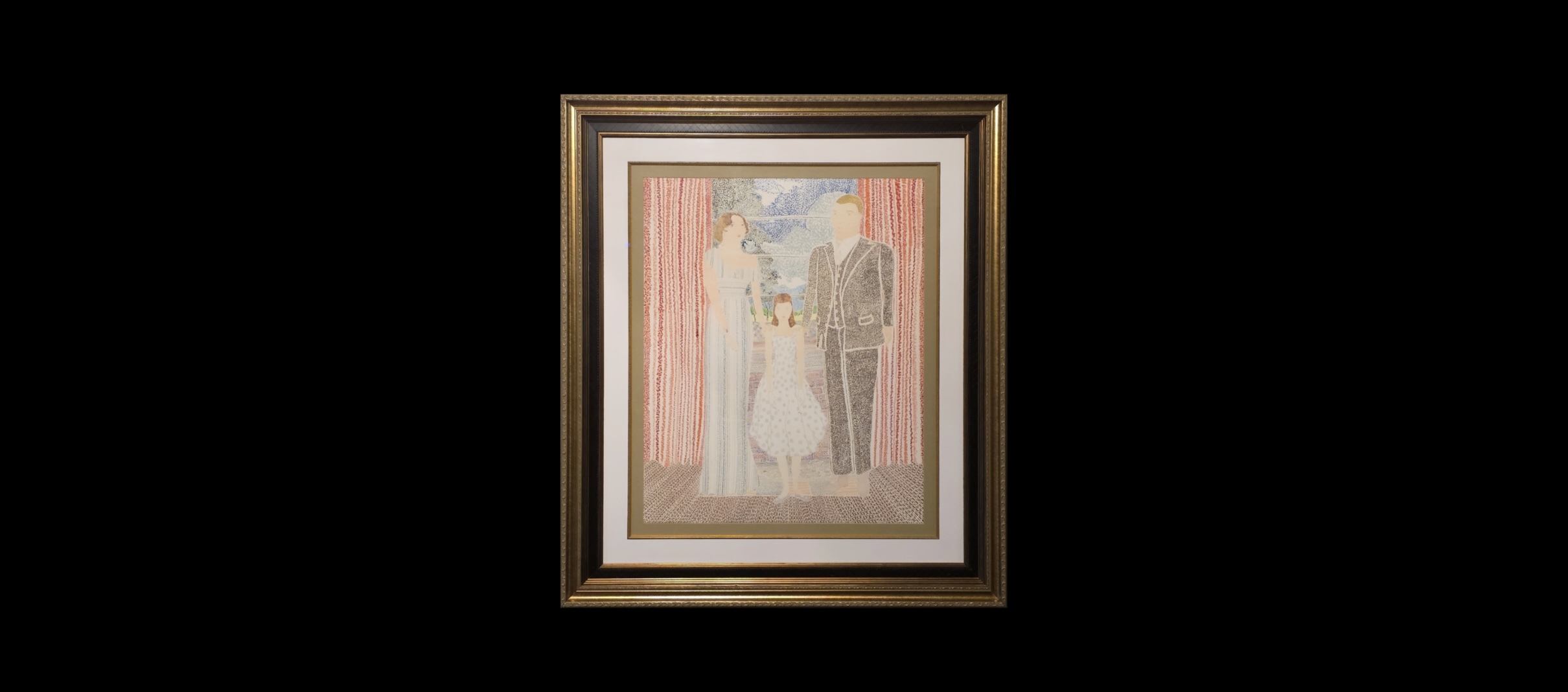
Gonzálezism
Gonzálezism is an art movement founded by artist and writer L. C. Atencio in the spring of 1999. At its core, Gonzálezism is built upon a simple but deeply human belief: That ordinary life possesses extraordinary value.
For centuries, much of what the art world defined as “high art” revolved around royalty, aristocracy, political power, wealth, mythology, conquest, or grand historical spectacle. Kings were painted. Queens were immortalized. Banquets, empires, ceremonies, and elite social structures became symbols of importance worthy of preservation through fine art.
Gonzálezism proposes something different.
It proposes that the ordinary human being is equally worthy of artistic reverence.
A parent returning home from work. A child eating ice cream on a summer afternoon. A couple holding hands while crossing the street. A family sitting quietly in their living room. A person exhausted after a long shift. Friends laughing together at a movie theater. Someone watching the rain from a bus stop.
These moments matter.
Gonzálezism seeks to elevate the everyday human experience into the sphere of fine art — not as parody, irony, or satire, but with sincerity, dignity, warmth, and respect.
Because at the end of the day, regardless of status, wealth, nationality, politics, language, or background, we remain profoundly alike. We all love. We all suffer. We all dream. We all bleed. We all sweat. We all lose people we love. We all search for meaning. We all desire peace, belonging, and connection.
Gonzálezism exists to remind us of this shared humanity.
⸻
The Origin of the Name
The name “Gonzálezism” comes from the surname González — the last name of L. C. Atencio’s mother.
The movement was named in her honor.
Behind the philosophical structure of Gonzálezism exists something deeply personal: Gratitude. The movement was born not from a desire for prestige, but from love and appreciation for the person who protected, nurtured, and encouraged the artist throughout his life.
Every painting, every drawing, every idea connected to Gonzálezism carries within it a quiet act of remembrance and appreciation. The movement recognizes the importance of the people who shape us long before the world ever notices us.
In many ways, Gonzálezism argues that love itself is foundational to art.
Not superficial love. Not performative love. But the kind of love expressed through sacrifice, protection, patience, encouragement, and presence.
The movement therefore begins not with institutions or theories, but with human relationships.
⸻
The Philosophy of Gonzálezism
Gonzálezism challenges the notion that importance must appear grand in order to deserve artistic attention.
The movement rejects the idea that beauty only exists in luxury, power, or spectacle. Instead, Gonzálezism embraces the emotional and visual significance of contemporary life exactly as it is lived.
A grocery store. A neighborhood street. A crowded café. A movie theater. A small apartment. A public park. A rainy afternoon. A family photograph. A worker commuting home.
These are not viewed as lesser subjects.
They are viewed as evidence of life itself.
Gonzálezism argues that modern people deserve to see themselves represented within fine art without needing to become royalty, mythology, or historical symbols first. The movement embraces emotional honesty, accessibility, equality, warmth, familiarity, and recognition.
It does not seek to separate fine art from ordinary people.
It seeks to unite them.
⸻
The Dot and the Line
One of the defining visual principles of Gonzálezism is the presence of at least one dot and one line.
These symbols represent the movement’s most foundational ideas.
The dot symbolizes potential.
A single point may appear small, but even the smallest presence can influence the world around it. A single person can comfort another human being. A single act of kindness can alter someone’s day. A single idea can transform an entire life. Gonzálezism embraces the belief that individuals matter, even when society treats them as insignificant.
The line symbolizes continuity, movement, freedom, and connection.
Life is not isolated into disconnected moments. Our experiences follow us. Our childhood affects our adulthood. Our memories influence our present. Our losses shape our joys. The line within Gonzálezism represents this emotional and human continuity — the way life stretches backward and forward through time, connecting every experience together.
Together, the dot and the line form a visual language centered around human existence itself.
⸻
Equality Through Art
At the center of Gonzálezism is equality.
Not political superiority. Not social hierarchy. Not elitism.
Equality.
The movement contends that human dignity is not determined by wealth, fame, status, or institutional power. The ordinary person walking down the street possesses just as much emotional depth, complexity, and importance as any monarch ever painted throughout history.
Gonzálezism therefore treats ordinary existence as worthy of preservation.
A grandfather sitting quietly on a porch may be as emotionally powerful as a royal portrait. A child drawing with crayons may carry as much meaning as an imperial banquet scene. A tired worker removing their shoes after a long shift may reveal more truth about humanity than manufactured spectacle ever could.
The movement does not seek to erase traditional fine art.
It seeks to expand the definition of what fine art may include.
⸻
Community, Love, and Human Connection
Gonzálezism believes that art has the ability to heal, connect, and unify people.
Modern life often encourages division. People are separated by politics, economics, geography, religion, ideology, and countless other structures that continuously emphasize difference. Gonzálezism moves in the opposite direction.
It focuses on what we share.
The movement encourages empathy. It encourages kindness. It encourages emotional honesty. It encourages seeing beauty in one another.
Art, within Gonzálezism, becomes communal rather than exclusionary. It is not designed only for experts, institutions, or academic interpretation. It is meant to reach people emotionally — across demographics, generations, and cultures.
The goal is not to create distance between art and the public.
The goal is to create recognition.
Recognition that another person’s life matters. Recognition that ordinary existence possesses beauty. Recognition that humanity itself is worthy of tenderness.
⸻
Contemporary Life as Worthy Subject Matter
Gonzálezism embraces contemporary existence without shame.
The movement welcomes depictions of:
- Families.
- Workers.
- Streets.
- Restaurants.
- Neighborhoods.
- Public transportation.
- Daily routines.
- Nature.
- Friendship.
- Love.
- Aging.
- Childhood.
- Everyday environments.
- Modern culture.
- Shared human rituals.
It does not insist that life must appear glamorous in order to become meaningful.
The ordinary is meaningful already.
Rather than escaping into fantasy alone, Gonzálezism often chooses to engage directly with real human experiences occurring in the present world. It acknowledges environmental concerns, emotional realities, modern anxieties, cultural shifts, and the emotional atmosphere of contemporary life while still emphasizing hope, warmth, and humanity.
⸻
An Invitation to Artists Everywhere
Gonzálezism is not confined to a single artist.
It is an open invitation.
The movement encourages artists, photographers, illustrators, writers, filmmakers, designers, and creators of all kinds to depict the beauty of ordinary existence through their own perspective.
You do not need permission to create meaningful work. You do not need luxury to create beauty. You do not need status to deserve artistic expression.
Your life matters. Your experiences matter. Your perspective matters.
Gonzálezism invites creators everywhere to share their interpretation of modern human beauty with the world.
A photograph of your neighborhood. A sketch of your family. A painting of your coworkers. A drawing of your favorite café. A portrait of someone you love. A quiet moment from your everyday life.
All of it belongs.
Artists and creators are encouraged to share their work on their social media using the hashtag:
#Gonzálezism
Not as a trend. Not as a competition. But as a collective reminder that humanity is more connected than divided.
⸻
The Beauty of the Mundane
One of the central beliefs of Gonzálezism is that the mundane is not empty.
It is alive.
The routines people often overlook are, in reality, the substance of human existence itself. Most of life is not spent in monumental historical moments. Most of life unfolds quietly:
Making breakfast. Driving to work. Walking the dog. Laughing with friends. Watching television with family. Listening to music alone at night. Waiting for someone to come home.
Gonzálezism recognizes these moments as emotionally sacred.
The movement proposes that ordinary life does not need to transform into fantasy before becoming worthy of artistic preservation.
It is worthy already.
⸻
A Movement Rooted in Humanity
Ultimately, Gonzálezism is an artistic philosophy rooted in human dignity.
It believes that art should not merely observe humanity from a distance. It should participate in it. It should comfort people, connect people, inspire people, and remind people that their lives possess value.
The movement rejects hatred, cruelty, dehumanization, and elitism. It embraces warmth, empathy, equality, emotional truth, and community.
Gonzálezism exists because life itself — even in its quietest forms — deserves to be seen.
And perhaps most importantly: It deserves to be remembered.